Enforcement · · 3 min read
From data to safer streets: how AI supports fair enforcement
Rules that are not enforced lose their force. Here is how cameras and AI help municipalities enforce objectively and transparently, while protecting privacy.
UTO Technologies
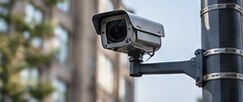
A bicycle street, a school street, a 30 km/h zone: every traffic rule is an agreement about how we share the street. But an agreement nobody checks quickly loses its force. Enforcement is not a goal in itself; it is what turns a well-designed street into a genuinely safe one. The question is how to do it in a way that is fair, feasible and acceptable.
Why traditional enforcement falls short
Police zones and municipalities have limited capacity. A patrol cannot be on every street every day, and behaviour adapts the moment someone in uniform appears. On top of that, some offences are hard to establish objectively. Whether a car overtook a cyclist too closely, or drove too fast down a narrow street, often becomes one person’s word against another’s.
The result: offences that everyone sees but that are rarely sanctioned. That undermines not only safety but also trust in the rule itself.
What is more, a handful of checks says little about the bigger picture. How often does an offence really happen? At what times? And does it decrease after enforcement? Without continuous data, those questions stay unanswered.
What AI changes
An AI camera watches continuously and consistently. The system recognises every road user, follows its path and records when a rule is broken, for example when a car overtakes a cyclist in a bicycle street or drives too fast. Every record comes with a short video clip, a time, a location and the measured data.
Enforcement thus shifts from chance checks to systematic follow-up. Not because more fines are needed, but because the same offence at the same moment is treated the same way, regardless of who happens to be nearby.
Fair means verifiable
Automation rightly raises questions. Who decides? Can an algorithm make mistakes? That is why AI should support a record and leave the decision to a person. Every clip must stand on its own: anyone watching it should see what happened without further explanation.
That also makes the system transparent for the person who receives a sanction. A clear image of your own offence is harder to dispute than a report based on someone’s judgement. And the municipality can explain why, where and how it enforces.
Fairness starts before the first record. Agree in advance with the sanctioning officer or police zone which offences are followed, what information a case must contain and who reviews the clips. Tell the neighbourhood, too: announcing that a street is monitored is often a first step towards better behaviour. The aim is not to catch people out, but to make the rule visible.
Privacy as a design choice
Enforcement needs evidence, but that does not mean everything and everyone has to be filmed and stored. Faces and number plates can be blurred, there is no personal identification and the responsible authority receives only the data relevant to enforcement. The system is designed with the GDPR as its starting point.
This keeps the privacy impact on the thousands of road users who do follow the rules as small as possible.
More than sanctions
The same camera that records offences also measures how the street is used: how many cyclists ride there, how fast traffic moves and how well the rules are respected. That shows whether enforcement is having an effect, and lets you adjust where needed, with an extra design measure, better signage or an awareness campaign.
In the end the goal is not as many fines as possible, but a street where everyone feels safe. Objective data help you work towards that, fairly and visibly.